
Most dog walkers offer 20-, 45-, or 60-minute walks, but there isn’t a one-size-fits-all answer. The ideal walk length depends on your dog’s physical condition, energy level, breed, and daily exercise needs, not simply the amount of time spent outside.
Here’s what matters when determining walk length:
- Typical ranges: Most professional walks fall between 20 and 60 minutes
- Dog-specific needs: Breed, age, and health directly affect ideal duration
- Purpose of the walk: Bathroom breaks, exercise, and behavior support vary
- Consistency over extremes: Regular, balanced walks outperform occasional long outings
At Boston’s Best Dog Walkers, services like structured daily walks and hikes are designed around these principles, supporting both physical exercise and behavioral balance.
If your dog still seems restless or unfocused despite regular walks, the issue is often how, and how long, they’re being walked.
Understanding how professionals structure walks can reshape daily routines and long-term behavior.
Factors That Influence How Long a Dog Should Be Walked
There’s no universal walk duration that works for every dog.
Professional dog walkers and trainers adjust walk length based on a combination of physical, behavioral, and environmental factors.
Understanding these variables helps ensure walks support health, behavior, and long-term well-being, not exhaustion or frustration.
- Breed Energy Levels: High-drive working breeds typically require longer, structured walks than low-energy or companion breeds.
- Age and Life Stage: Puppies and senior dogs need shorter, gentler walks compared to healthy adult dogs.
- Physical Health and Mobility: Joint issues, heart conditions, or injuries often require reduced duration and slower pacing.
- Mental Stimulation Needs: Dogs lacking mental engagement may need longer or more varied walks to stay balanced.
- Behavioral Goals: Training-focused walks differ in length from exercise-only walks meant to release energy.
- Environment and Terrain: Urban settings, weather conditions, and route difficulty directly impact appropriate walk duration.
- Social Exposure Tolerance: Some dogs benefit from longer social walks, while others require shorter, calmer outings.
- Recovery and Conditioning Level: Dogs new to exercise often need gradual increases in walk duration over time.
When walk time aligns with these factors, dogs stay healthier and more focused. The right duration isn’t about minutes, it’s about meeting the dog’s actual needs.
These factors help explain why professional walking services offer multiple time options.
How Long Do Professional Dog Walkers Walk Dogs?
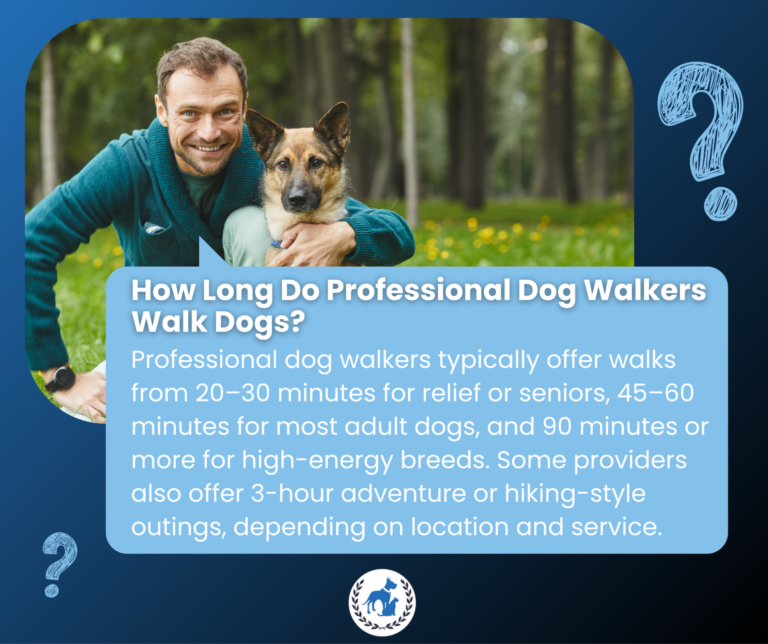
Professional dog walking services offer walks ranging from quick relief outings to longer adventures.
While a “standard” walk time is often advertised, the ideal duration varies by dog. Reputable providers balance individual needs with structured, predictable walk options.
Common Professional Dog Walk Durations
Most professional dog walkers offer a set range of walk lengths to suit different dogs and lifestyles:
- 20–30 minutes: Short relief walks, often suitable for senior dogs, puppies, or apartment living
- 45–60 minutes: The most common option for adult dogs needing regular daily exercise
- 90 minutes or longer: Extended walks for high-energy or working breeds
- 3 hours: Full adventure or hiking-style outings designed for significant physical and mental stimulation
Availability of longer walks can vary by provider and location.
Factors That Influences The Right Walk Length
While walk durations are generally consistent, professionals may consider a few variables when determining what works best:
- Breed type and natural energy level
- Age, health, and overall physical condition
- Weather and environmental conditions
- Behavioral goals, such as training support versus pure exercise
Walk time is often adjusted slightly based on how the dog responds, helping ensure proper activity without overexertion.
How Walk Length Affects Pricing
Pricing typically increases with walk duration, reflecting added time, responsibility, and handling. Short walks usually cost less, while longer sessions are priced higher.
Solo walks commonly range from 30–60 minutes, offering focused attention.
Group walks often last 45–90 minutes, allowing for pacing differences and structured social interaction when managed appropriately.
Once walk length is clear, understanding what happens during the walk matters.
What Happens During a Professional Dog Walk
Many dog owners assume professional dog walking simply means clipping on a leash and heading out.
In reality, a well-run walk follows a structured process designed to keep dogs safe, engaged, and properly exercised.
A professional walk is intentional and responsive to the dog’s needs, not a passive stroll around the block.
Pre-Walk Safety Checks and Preparation
Before leaving, professional dog walkers typically perform basic safety checks.
This includes ensuring collars or harnesses fit correctly, leashes are secure, and any notes from previous walks are reviewed.
Walkers may also assess the dog’s energy level, physical condition, and behavior before heading out. Weather conditions often influence route choice, pacing, and overall walk length.
These small preparation steps help reduce risks once the walk begins.
Active Engagement During the Walk
Professional dog walking involves awareness and interaction rather than passive walking.
Walkers monitor leash behavior, adjust pace, and respond to the dog’s focus and comfort level throughout the outing.
Engagement may include reinforcing calm walking, allowing appropriate sniffing time, and managing distractions.
This approach supports both physical exercise and mental balance, especially in busy or stimulating environments.
Structured Use of Time and Movement
A quality walk includes structure, even when it looks relaxed.
Walkers often vary pace, change routes, or incorporate brief pauses based on the dog’s needs.
Some walks may include light training reinforcement or controlled social exposure, while others focus purely on movement and exploration.
The goal is purposeful activity rather than simply filling time.
Post-Walk Updates and Communication
After the walk, many professional services provide some form of feedback.
This may include notes on bathroom breaks, energy levels, behavior, or anything unusual observed during the walk.
Clear communication helps pet owners stay informed and ensures continuity between walks, especially when multiple caregivers are involved.
Understanding this process highlights why the right professional service truly matters.
The Boston’s Best Dog Walkers Advantage
Choosing a dog walking service is about more than filling time during the day.
It’s about trust, consistency, and knowing your dog is being handled thoughtfully in real-world conditions. Small operational details often make the biggest difference in daily care quality.
Here’s what sets a truly professional service apart.
- GPS Walk Tracking & Verification: Real-time GPS tracking confirms routes, duration, and movement, removing uncertainty and guesswork.
- Trained Walkers, Not Just Leash Holders: Professional education ensures walkers understand canine behavior, stress signals, and appropriate handling.
- First Aid and Emergency Readiness: Proper training prepares walkers to respond calmly during medical or environmental emergencies.
- Urban Environment Awareness: Experience navigating traffic, crowds, and weather changes supports safer, more controlled walks.
- Structured Decision-Making: Walkers adjust pacing, routes, and engagement based on each dog’s comfort and energy.
- Preparedness Over Convenience: Carrying essential supplies and planning routes reduces risk during unpredictable situations.
- Clear Post-Walk Communication: Thoughtful updates help maintain continuity of care across walks and caregivers.
The advantage is consistent standards, GPS-verified accountability, and informed handling that prioritizes each dog’s safety, behavior, and well-being on every walk.
Choosing the Right Walk Length for Your Dog

At Boston’s Best Dog Walkers, walk length is never one-size-fits-all. Our services are designed to meet dogs where they are physically, mentally, and behaviorally:
- Solo Walks: Structured, one-on-one walks that reinforce leash manners, impulse control, and calm engagement at your dog’s natural pace.
- Group Walks: Professionally managed pack walks that balance exercise, social exposure, and obedience while maintaining safety and control.
- Bark Bus Hiking Adventures: Longer, structured hiking outings led by trained handlers, designed to provide extended physical and mental stimulation in a controlled, leashed environment.
Together, these services ensure your dog receives the right level of activity, structure, and consistency.