
Positive reinforcement for dogs is a training method that rewards behaviors you want to see more often. By immediately rewarding the right choice with treats, praise, play, or another valued reward, dogs learn what works, making training clearer, more consistent, and more reliable.
Here’s what truly matters with positive reinforcement training:
- Timing creates clarity: Rewards must follow behavior within seconds to stick
- Motivation drives learning: Food, praise, play, and access all count as rewards
- Consistency shapes habits: Repetition turns choices into automatic behaviors
- Structure beats guesswork: Clear cues and predictable outcomes prevent confusion
At Boston’s Best Dog Walkers, our structured training walks and enrichment-focused services apply these principles daily, reinforcing calm, reliable behavior even when owners are busy.
If your dog listens at home but struggles elsewhere, the details matter.
Understanding how rewards, timing, and consistency work together can completely change how your dog learns, not just today, but for years to come.
What Is Positive Reinforcement in Dog Training?
Positive reinforcement means adding something your dog values immediately after a desired behavior. That reward could be food, praise, play, or access to something enjoyable.
The goal is simple: make the right behavior worth repeating.
The Science Behind How It Works
From a behavioral science perspective, positive reinforcement follows a clear formula: behavior followed by an immediate reward increases the likelihood of that behavior happening again.
The “positive” refers to adding something, not judging it as good or bad.
Why Timing Matters So Much
Dogs form associations quickly, but only when timing is precise.
Rewards should come within about three seconds of the behavior. This timing triggers dopamine release in the brain, helping dogs connect the reward to the exact action that earned it.
How Rewards Shape Behavior Over Time
Each rewarded repetition strengthens neural pathways in your dog’s brain.
With consistent practice, behaviors become automatic. This is why short, frequent sessions work better than long, inconsistent ones.
Learning Through Consequences
Dogs constantly evaluate outcomes.
If calm behavior leads to rewards, they repeat it.
If unwanted behavior produces no benefit, it fades. Positive reinforcement teaches dogs what to do, instead of focusing on what to avoid.
How It Differs From Punishment-Based Methods
Unlike punishment, positive reinforcement builds willingness and engagement.
Dogs trained this way show more enthusiasm, faster learning, and stronger bonds with their handlers. They think through choices instead of simply reacting.
When applied consistently, positive reinforcement creates confident dogs who understand expectations clearly, and enjoy meeting them.
Types of Rewards Used in Positive Reinforcement Training
Positive reinforcement works best when rewards are chosen intentionally, not randomly.
Different dogs respond to different motivators, and understanding those differences keeps training clear and effective.
Food Rewards and Why They Work So Well
Food rewards are often the fastest way to communicate success during training. They create immediate feedback that helps dogs connect actions with outcomes.
- High-value treats trigger strong motivation and faster learning
- Small, soft treats keep sessions flowing without distraction
- Novel or training-only treats maintain excitement and focus
- Precise timing strengthens the behavior-reward connection
When used correctly, food rewards provide clarity and speed. They are especially effective when introducing new behaviors or working through distractions.
Praise and Social Reinforcement
Some dogs are deeply motivated by connection rather than food. Praise and attention can become powerful rewards when delivered clearly.
- Verbal markers like “yes” or “good” improve timing and understanding
- Calm, enthusiastic praise reinforces correct choices
- Eye contact and tone matter more than long sentences
- Physical affection works best for dogs who actively seek it
Social rewards strengthen trust and engagement. They’re most effective once a dog understands the behavior being reinforced.
Play and Activity-Based Rewards
For high-energy or working dogs, movement can outperform treats. Play-based rewards tap into natural drive and excitement.
- Tug or fetch builds motivation for recall and engagement
- Short bursts of play prevent overstimulation
- Activity rewards work well after successful repetitions
- Best used when food loses value in high-arousal environments
Play rewards create enthusiasm and confidence. When used strategically, they turn training into a shared experience.
Choosing the Right Reward at the Right Time
No single reward works in every situation. Effective training adapts to the dog’s motivation in the moment.
- Rotate rewards to prevent dependency or boredom
- Match reward value to task difficulty
- Increase reward value as distractions increase
- Fade rewards gradually once behaviors stabilize
The right reward makes learning efficient and stress-free. Clarity, timing, and relevance are what make reinforcement truly effective.
That said, choosing rewards is only the first step, understanding their impact matters just as much.
Benefits and Limitations of Positive Reinforcement
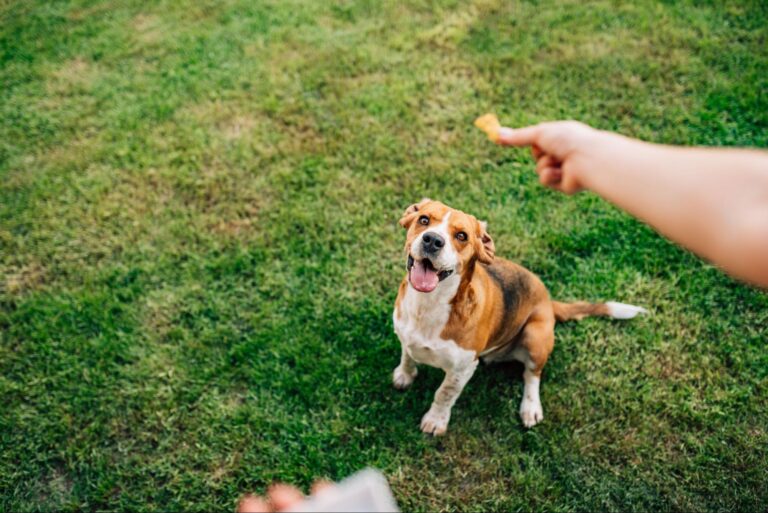
Positive reinforcement is one of the most trusted and widely recommended training approaches, especially for building confidence, clarity, and engagement.
When used correctly, it creates strong behavior foundations while keeping dogs emotionally secure and willing to participate in learning.
Why Positive Reinforcement Works So Well
Positive reinforcement teaches dogs what to do, rather than suppressing behavior through fear or discomfort.
By rewarding correct choices, dogs gain motivation, clarity, and confidence.
Over time, this strengthens the bond between dog and handler and encourages problem-solving instead of avoidance.
Behaviors built through choice tend to last longer and carry fewer anxiety-related side effects.
When Positive Reinforcement Is Most Effective
This approach excels when teaching new behaviors, building trust, and shaping reliable habits.
It’s especially effective for puppies, fearful dogs, and dogs learning in distracting environments.
Reward-based training helps dogs associate learning with positive outcomes, making them more receptive even in busy or stimulating real-world settings.
The Role of Negative Reinforcement When Needed
While positive reinforcement builds behavior, dogs also learn through pressure and release in everyday life.
Used correctly, mild negative reinforcement, such as releasing leash pressure when a dog stops pulling, can clarify boundaries without fear or force.
The key is timing and restraint: pressure must be gentle, predictable, and removed immediately when the dog makes the right choice.
Long-Term Behavioral Benefits
Dogs trained primarily through reinforcement tend to stay emotionally regulated and adaptable.
They’re less likely to shut down, act defensively, or develop fear-based responses, and they generalize skills more effectively across environments.
Challenges and Limits of Positive Reinforcement
Positive reinforcement requires precision and consistency to work effectively.
Poor timing or mixed household responses can slow progress or reinforce the wrong behaviors. It isn’t permissive, but it does take patience, some behaviors must be built gradually.
When paired with clear boundaries and well-timed pressure-and-release, it remains a reliable, humane approach to long-term behavior change.
To make reinforcement effective, timing and consistency become the deciding factors.
Why Dogs Need a Balance of Positive and Negative Reinforcement
Dogs don’t learn through rewards alone. While positive reinforcement is essential for building motivation and trust, dogs also understand boundaries, pressure, and consequences through natural communication.
In canine social behavior, access to movement, space, play, and freedom is constantly earned or removed based on behavior. Effective training reflects this same reality.
A balanced approach gives dogs clear information:
- Good behavior is rewarded with praise, freedom, play, or access
- Unwanted behavior results in loss of opportunity, such as pausing movement, ending play, or resetting the situation
When paired correctly with positive reinforcement, it helps dogs understand boundaries, build impulse control, and stay emotionally regulated in real-world environments.
Dogs thrive on clarity. Balance creates predictable outcomes, reduces confusion, and produces behavior that holds up beyond the training session.
Myths to Ignore About Positive Reinforcement Training
Positive reinforcement is one of the most researched training approaches, yet it’s still misunderstood.
Outdated ideas and half-truths often cause owners to dismiss methods that actually build clearer communication and better behavior.
These are common myths that deserve to be left behind.
- “Dogs Become Treat Dependent”: Proper reinforcement fades rewards gradually, creating habits, not reliance on constant treats.
- “Reward-Based Training Is Permissive”: Clear rules and consistent rewards reinforce structure, not chaos or lack of boundaries.
- “It Only Works for Easy Dogs”: All dogs learn through consequences; motivation varies, but the learning principle remains universal.
- “Praise Isn’t a Real Reward”: Social rewards can be powerful motivators when timed correctly and matched to the dog.
- “You Can’t Set Limits Without Punishment”: Reinforcement teaches what to do, reducing unwanted behaviors without fear.
- “Training Takes Longer This Way”: While suppression is fast, reinforced behaviors last longer and generalize better.
- “Rewards Replace Leadership”: Consistent reinforcement builds trust and clarity, strengthening guidance rather than weakening it.
Positive reinforcement isn’t about shortcuts or softness. It’s about teaching dogs how to succeed through clear outcomes they understand and trust.
Get Structured Training From Boston’s Best!

Positive reinforcement works because it aligns with how dogs naturally learn, through outcomes, not intimidation. By rewarding the right behaviors at the right moment, dogs gain clarity, confidence, and motivation to engage. Over time, those rewarded choices become habits that hold up in real-world environments.
This approach doesn’t ignore boundaries. It teaches them. Dogs learn what earns rewards, how to make good decisions, and how to stay regulated without fear or shutdown. While it requires consistency and patience, the payoff is behavior that lasts longer and adapts better across situations.
If you want professional support applying positive reinforcement correctly, our services reinforce these principles every day:
- Train & Play Doggie Daycare: A structured daycare environment where dogs practice calm behavior, impulse control, and social skills while earning freedom through positive reinforcement.
- Professional Training Services: Hands-on guidance that helps owners apply reward-based training with clear timing, consistency, and real-world relevance.
- Structured Dog Walking: Daily walks that reinforce leash manners, focus, and emotional regulation in real-life environments, not just at home.
Together, these services help dogs build reliability, confidence, and calm behavior through consistent, reward-based learning, one well-timed choice at a time.