
Positive reinforcement training for dogs is most effective when rewards are immediate, meaningful, and consistent. Poor timing, unclear expectations, and inconsistent reinforcement confuse dogs far more than a lack of motivation.
Here’s what actually matters most when training any dog:
-
- Clarity over commands: Dogs respond to clear markers and consistent cues, not repeated words
-
- Motivation beyond treats: Food isn’t the only reward. Play, movement, praise, & freedom matter
-
- Structure before freedom: Dogs learn best when expectations are predictable
-
- Environment matters: Training must transfer from home to real-world distractions
-
- Consistency beats intensity: Small, repeated successes create lasting behavior change
At Boston’s Best Dog Walkers, we reinforce these principles daily through structured walks, train-and-play daycare, and real-world conditioning across Boston’s busy neighborhoods.
If your dog listens sometimes but falls apart outside, or seems uninterested in rewards, the issue usually isn’t effort. It’s structure.
Understanding how dogs learn, what motivates them, and how behaviors generalize can completely change your results.
And that’s exactly what the rest of this guide walks you through.
Why Your “Stubborn” Dog Isn’t Actually Stubborn
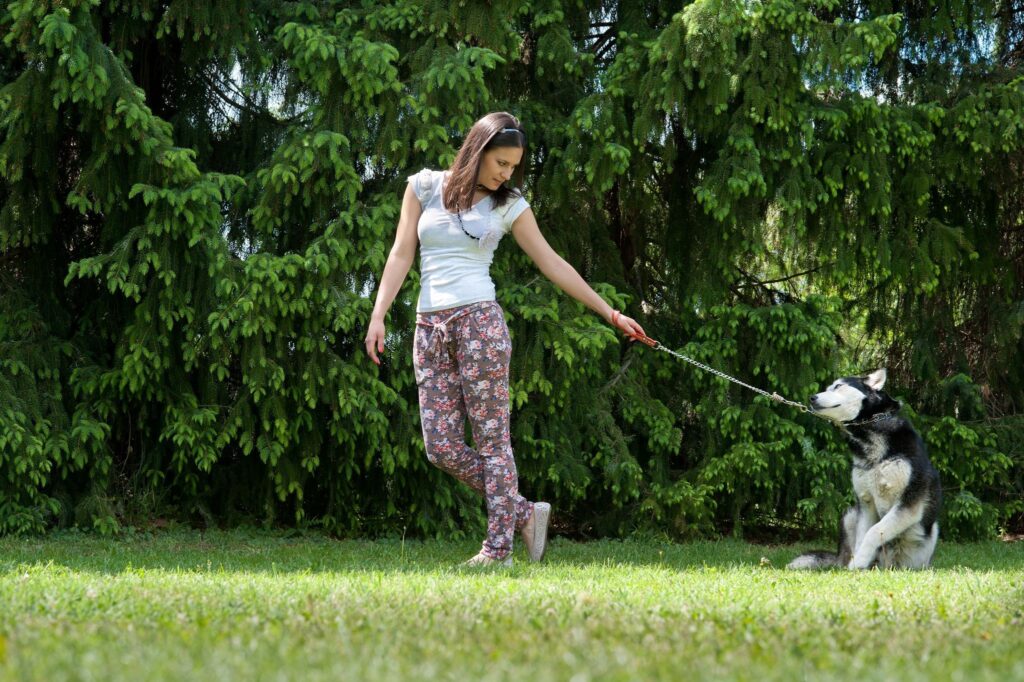
Most dogs labeled “stubborn” aren’t being difficult on purpose.
They’re responding the only way they know how when something feels unclear, uncomfortable, or overwhelming.
When you stop viewing resistance as defiance and start seeing it as information, training becomes less frustrating, and far more effective.
Lack of Clarity and Physical Comfort
Many dogs appear stubborn simply because they don’t fully understand what’s being asked.
Dogs don’t automatically generalize commands, and inconsistent cues create confusion fast. Physical discomfort also plays a role.
Joint pain, fatigue, or overstimulation can make basic behaviors difficult, even for dogs that usually listen well.
Stress, Anxiety, and Past Training Experiences
Dogs learn through association, and stressful experiences directly affect engagement.
If training has been unpredictable or negative, dogs often shut down. In busy urban environments like Boston, constant noise, crowds, and movement overwhelm a dog’s nervous system.
Breed Traits and Mental Stimulation Needs
Some breeds were designed to think independently.
Terriers, hounds, and working breeds need mental challenge as much as physical exercise. Without enough stimulation, these dogs disengage.
Motivation and Training Consistency
Training breaks down when rewards don’t matter to the dog.
Some dogs work for food, others for play, praise, or access to their environment.
Timing is equally critical.
In positive reinforcement training, delayed or inconsistent rewards create confusion. When training feels unclear or unrewarding, dogs disengage logically.
Understanding the causes makes it easier to apply a structured training system.
The 3-Phase Positive Reinforcement System That Works for Dogs
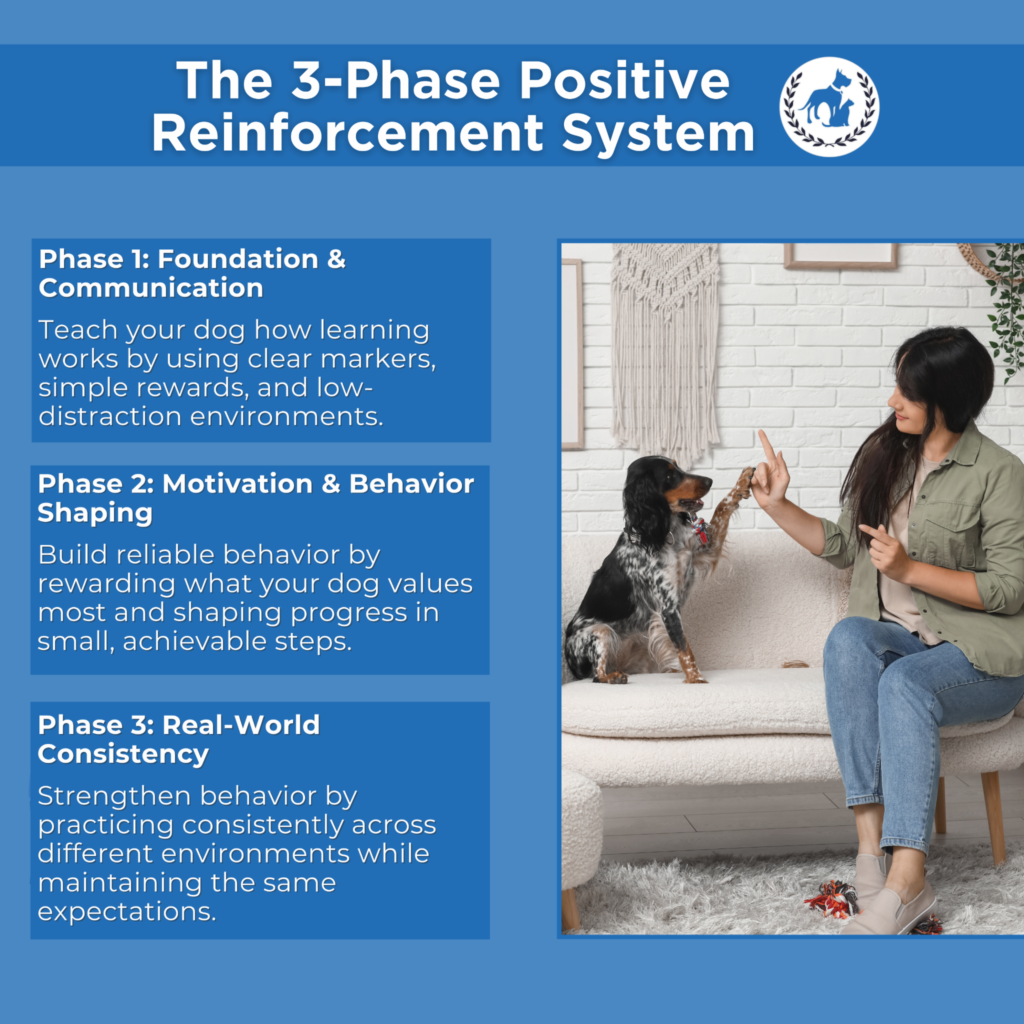
Most dog owners use positive reinforcement inconsistently, hoping something will eventually click.
Without a clear structure, even good intentions lead to confusion and stalled progress. This three-phase system focuses on clarity, motivation, and consistency.
It addresses the real causes of training resistance while building behaviors that actually hold up long term.
Phase 1: Foundation Building Through Trust and Communication
Every successful training plan starts with trust and clarity.
Before expecting obedience, dogs must understand how communication works and what earns reinforcement.
This phase is about teaching your dog how to learn:
-
- Use a clear marker like a clicker or a verbal “yes” to signal correct behavior
-
- Train in a quiet, low-distraction environment to support focus
-
- Reward simple engagement such as eye contact, calm sitting, or attention
-
- Keep sessions short, consistent, and predictable
When communication is clear, dogs relax and engage more willingly. A strong foundation makes every future behavior easier to teach.
Phase 2: Behavior Shaping With the Right Motivation
Once communication is established, motivation becomes the driving force behind progress. Dogs work best when the reward genuinely matters to them.
This phase is about finding what your dog values and using it strategically.
-
- Identify your dog’s highest-value rewards beyond basic treats
-
- Reserve the best rewards for the most challenging behaviors
-
- Break commands into small, achievable steps
-
- Reward progress to build confidence
Shaping behaviors gradually prevents frustration for both dog and owner. Small wins add up to reliable, long-term results.
Phase 3: Consistency Across Different Environments
Dogs don’t automatically apply learned behaviors everywhere. Each new environment introduces new distractions and challenges.
This phase focuses on helping dogs succeed outside the home.
-
- Practice behaviors in gradually more distracting locations
-
- Start in familiar areas before moving to busier environments
-
- Maintain the same cues, timing, and expectations everywhere
-
- Adjust difficulty, not standards, when distractions increase
Consistency across environments is what makes training real-world reliable. Skills practiced everywhere are skills that actually stick.
Why Timing and Consistency Matter Most
Even the best system fails without precise timing and consistency. Dogs learn through immediate feedback, not delayed explanations.
Clear signals prevent confusion and speed up learning:
-
- Mark desired behavior within one to three seconds
-
- Use markers to bridge the gap between behavior and reward
-
- Ensure all family members use the same commands and rules
-
- Write down training guidelines to avoid mixed signals
Consistency builds trust and understanding faster than any treat. When timing and structure align, training becomes clear and effective.
Once structure is in place, the right rewards determine how far training goes.
Advanced Reward Strategies for Dogs Who “Don’t Care About Treats”
View this post on Instagram
When food doesn’t motivate your dog, it doesn’t mean training won’t work.
It simply means you haven’t uncovered what truly drives their behavior.
Dogs are motivated by far more than treats, and effective positive reinforcement training depends on identifying and using those natural motivators correctly.
Below are advanced reward strategies that help maintain engagement, focus, and long-term responsiveness.
-
- Motivation Hierarchy Awareness: Observing what your dog naturally seeks reveals whether they value food, play, attention, movement, or environmental access most.
-
- Choice-Based Reward Testing: Offering multiple reward options at once helps clearly identify which reinforcers your dog prioritizes instinctively.
-
- Social Reinforcement Use: Eye contact, praise, and physical affection often outperform treats for dogs that crave human connection.
-
- Movement-Based Rewards: Chase games, tug, or controlled freedom motivate dogs driven by motion and physical engagement.
-
- Life Rewards Integration: Asking for simple behaviors before walks, meals, or play turns everyday moments into powerful training tools.
-
- Environmental Access Rewards: Sniffing, exploring, or greeting other dogs can reinforce good behavior more effectively than food.
-
- Structured Play Control: Short, high-energy play sessions maintain excitement while preventing overstimulation or loss of focus.
-
- Variable Reward Scheduling: Mixing immediate and delayed rewards prevents boredom and keeps dogs actively engaged in training.
When rewards align with what your dog truly values, training becomes engaging instead of forced.
The right reinforcement keeps focus high, motivation strong, and learning consistent over time. Once you tap into what drives your dog, progress feels natural, for both of you.
Why Dogs Need Both Positive and Negative Reinforcement
Positive reinforcement is important, but it isn’t the whole picture. Dogs naturally understand pressure, boundaries, and consequences through body language and access to things they value.
In real-world training, dogs learn through balance:
-
- Good behavior earns rewards like praise, freedom, play, or off-leash time
-
- Poor behavior pauses opportunity, such as losing access to fun, movement, or engagement
When training relies only on rewards, behavior often breaks down in distracting or high-energy environments. A balanced approach gives dogs consistent information: make good choices and life opens up; make poor ones and things reset.
That structure is how dogs build reliable, confident behavior.
When to Seek Professional Help (And What to Look For)
View this post on Instagram
Even with consistency and patience, positive reinforcement training doesn’t always move forward on its own.
Some behaviors need more than at-home effort, especially when underlying stress, fear, or learned patterns are involved.
Knowing when to bring in professional help can save months of frustration and prevent small issues from becoming long-term behavioral problems.
Signs Home Training Isn’t Enough
Even dedicated owners can hit a wall when training challenges run deeper than surface-level behavior. Recognizing stalled progress early helps prevent frustration and escalation.
If training effort isn’t producing meaningful change, these signs often indicate the need for professional support.
-
- Little to no improvement after four to six weeks of consistent training
-
- Behaviors that worsen despite positive reinforcement efforts
-
- Aggression toward people or other dogs that escalates over time
-
- Shutdown behaviors, fear responses, or anxiety that intensify rather than improve
When these patterns appear, pushing harder rarely solves the problem. Professional guidance helps uncover root causes and reset the training approach safely.
What to Look for in a Qualified Trainer
Not all trainers follow the same standards or methods, and choosing the wrong one can slow progress or worsen behavior.
The right professional should prioritize clarity, ethics, and long-term results.
A qualified trainer combines education, experience, and humane training practices.
-
- A clear focus on positive reinforcement–based methods
-
- Experience with your dog’s breed or specific behavioral challenges
-
- Willingness to share success examples and recent client references
Avoid trainers who rely on dominance or punishment-driven techniques. The right professional builds confidence, consistency, and trust for both dog and owner.
Why Structured Programs Work Faster
Professional programs offer consistency that sporadic home training can’t match.
Dogs learn more efficiently when sessions follow predictable routines with clear communication and precise timing.
Structured programs build on progress from previous sessions instead of starting over each time.
When reinforcement is consistent across environments, behaviors become more reliable, and lasting change happens faster.
Building Better Behavior Through Clarity and Structure

If you’re looking for real-world support that reinforces training instead of undoing it, our services are designed to work together:
-
- Structured Doggie Daycare (Train & Play): A structured environment where dogs earn freedom through calm behavior, practice social skills, and reinforce obedience throughout the day.
-
- Professional Training: Hands-on, practical training focused on clarity, consistency, and behaviors that hold up in real-life situations, not just inside the home.
-
- Structured Dog Walking: Walks that go beyond bathroom breaks, reinforcing leash manners, impulse control, and calm behavior in real-world environments.
Together, these services create consistency across your dog’s daily routine, which is how lasting behavior change actually happens.